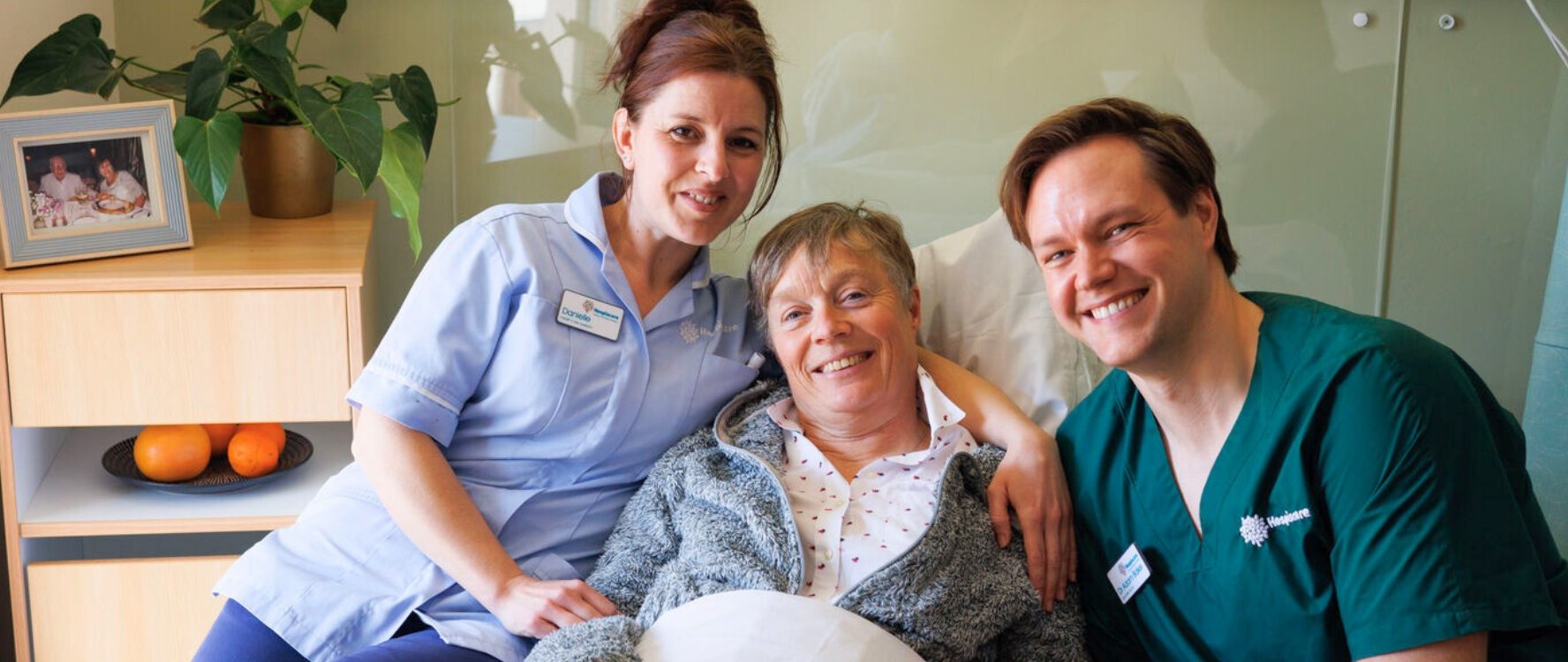
What does a paramedic bring to specialist palliative care?
I didn’t think I could bring much when I first came to Hospiscare, but it turns out that 28 years’ experience as a paramedic equips me with a unique set of skills.
Even though my dad died at Hospiscare many years ago, I didn’t know until I started how different the role would be. It’s not just the job itself, it’s the people. It’s hard to explain. All I can say is that the people who work here are very special and they make a quite extraordinary difference to people’s lives.
As a paramedic in the ambulance service, the focus is on preserving life and getting to hospital. At Hospiscare, the emphasis shifts – our job is to support our patients to achieve a good death at home.
In my role this means rapidly assessing patients during a crisis or sudden deterioration and managing acute symptoms. Often, I’ll use medication to help do this and I may need to reposition the patient to make them comfortable. I’m also trained to look for reversible causes of illness and determine whether a patient is deteriorating due to end of life, or if this is something treatable, such as a chest infection or sepsis.
Once stabilised, I carry out a more detailed assessment to understand causes and determine next steps. This might include a physical exam, reviewing medications, and gathering background from the patient or their carer or loved one. From there, I coordinate with the appropriate healthcare professionals to ensure the right ongoing support is in place.
If a Hospiscare paramedic comes out to see me, will I automatically be sent to hospital?
Absolutely not. Our goal is always to honour the patient’s wishes. Most often, that will be to remain at home. That’s why our rapid response team exists: to support the patient in their preferred place.
To achieve the best outcome, I’ll consider whether further at-home care from the hospice team is needed, if input from one of our specialist doctors or admission to our hospice would help, or if the patient can continue under NHS care. Often, ongoing support involves a combination of these services.
Sometimes, transferring to hospital is best for the patient and if that’s the case, I ensure that the patient and their family understand why this is necessary to give them the best possible care.
To find out more about Patch and his role at Hospiscare, click here.