
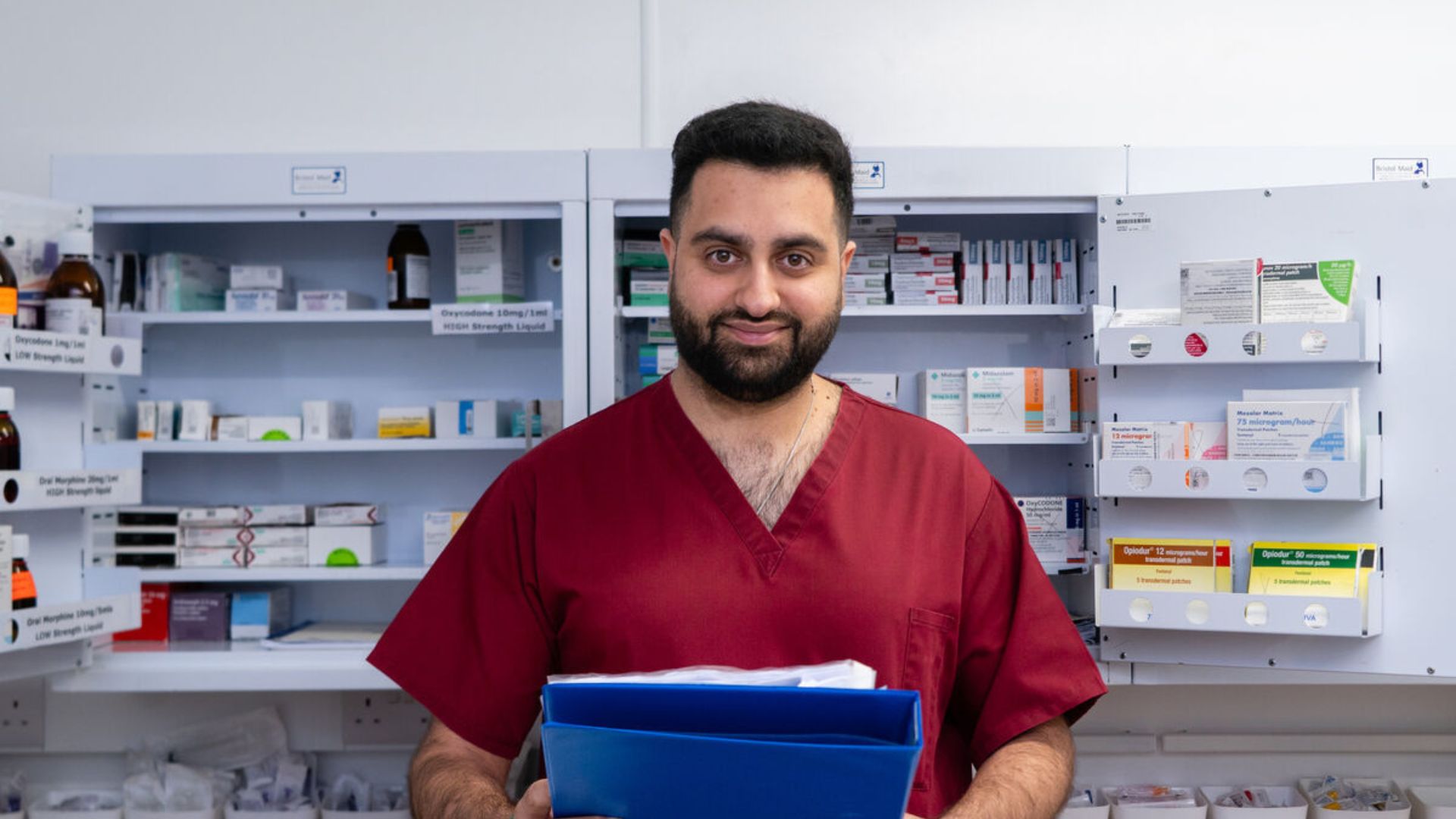
What can a pharmacist bring to specialist palliative care?
There are three main areas where my expertise has a positive impact on Hospiscare:
Medicine compatibility
There are lots of different medicines used in palliative care and often a patient will be taking several medications at once. I make sure that these medicines won’t interact negatively and are safe for the patient to take together.
Availability of medication
Whether on the ward or in the community, I ensure that whatever medication we prescribe can be sourced by the patient, or their relative or carer.
Policy and procedure setting
This is my ‘behind the scenes’ work, where I set or update policies and procedures concerning medication to benefit our patients. This work involves liaising with the RDUH hospital to ensure correct communications are in place for timely delivery of medication.

What do I do with my relative’s old medication?
The best course of action for any expired or unwanted medication is to take it to your community pharmacy.
All community pharmacies have a statutory contract with the NHS whereby they are commissioned to take back medications and dispose of them in a safe way. This ensures medications are destroyed in a manner that won’t damage the environment and stops these substances from falling into unsafe hands. Community pharmacies will accept any form of medication, except needles.
If you have any controlled drugs, it is best to let the pharmacy know when handing these over and put them in a separate bag or box if possible, as these will need to be segregated for destruction.


